Upcoming books
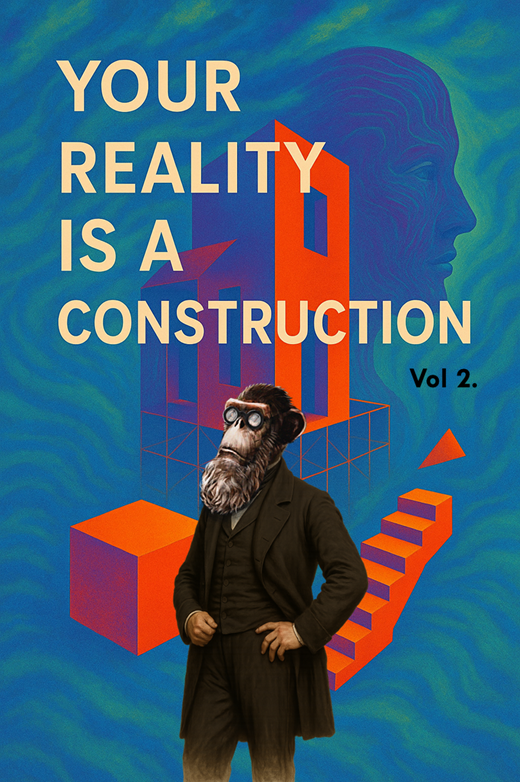
Your reality is a construction, Vol 2. by Carlos Velasco (2026). Pre-order here.
Abstract: Your reality is a construction, Vol. 2 is another of my independently published non-science books. It opens with a quiet recognition that much of everyday life unfolds on autopilot. From this starting point, it becomes a year-long invitation to examine how one’s sense of self, meaning, and reality has been shaped by habits, language, expectations, technology, and inherited narratives rather than by deliberate choice. Presented as 365 brief reflections voiced by the fictional thinker Thorpe Brown, the book does not seek agreement, self-optimisation, or definitive answers. Instead, it asks the reader to notice. To question what is taken for granted. To remain with discomfort, ambiguity, and curiosity. The book moves through four thematic phases: the theatre of illusions, the inner descent, unity and meaning, and the art of authorship. These mirror a gradual shift from sensing that life is staged, through inward examination, toward moments of connection and an ethical question about responsibility. The book offers a sustained daily space for reflection. It leaves the reader with a simple but demanding question. Are you paying attention. And if reality is partly constructed, are you directing the show.
Consumer consciousness: From sensation to digital perception by Olivia Petit and Carlos Velasco (2026). Upcoming.
Abstract: This book aims to introduce a new approach to understanding the consumer, as a conscioumer, by redefining the role of the consumer in today’s experience-driven context. It situates the consumer not simply as a purchaser but as a conscious experiencer whose sensory reality is reshaped by emerging technologies. Focusing on the evolving relationship between sensory perception and consciousness, the work highlights how multisensory experiences and technological integration are transforming consumer awareness into a new form of digital consciousness. By exploring how technologies such as artificial intelligence, augmented reality, and multisensory interfaces alter the sensory input that shapes conscious experience, the book questions the implications of this shift for consumer well-being and broader societal outcomes. It argues that conscious awareness is essential to understanding modern consumption beyond automatic or habitual behaviour, emphasising the importance of reflective engagement with experience. Ultimately, the book challenges traditional consumer models by proposing that consciousness, shaped by the senses and technology, is central to how consumers make meaning and decisions today. It invites further reflection on the ethical, social, and environmental impacts of this new digital consumer consciousness, advocating for practices that promote well-being and responsibility within the rapidly changing landscape of consumption.
Published books
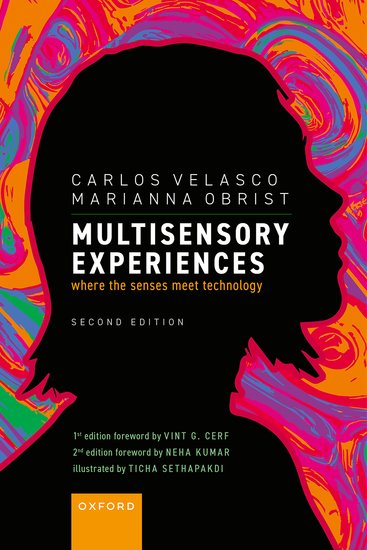
Multisensory experiences: Where the senses meet technology (2nd Ed.) by Carlos Velasco and Marianna Obrist (2025). Order here.
Abstract: Most of our everyday life experiences are multisensory in nature, they consist of what we see, hear, feel, taste, smell, and much more. Almost any experience, such as eating a meal or going to the cinema, involves a magnificently complex sensory world. In recent years, many of these experiences have been increasingly transformed through technological advancements such as multisensory devices and intelligent systems. This book takes the reader on a journey that begins with the fundamentals of multisensory experiences, moves through the relationship between the senses and technology, and finishes by considering what the future of those experiences might look like, and our responsibility in it. This new edition seeks to further empower the reader to shape their own and other people’s experiences by considering the multisensory worlds in which we live. It includes updated content on new technologies such as generative AI, and further development of an ethical framework around multisensory experiences. This book is a powerful and personal story about the authors’ passion for, and viewpoint on, multisensory experiences.
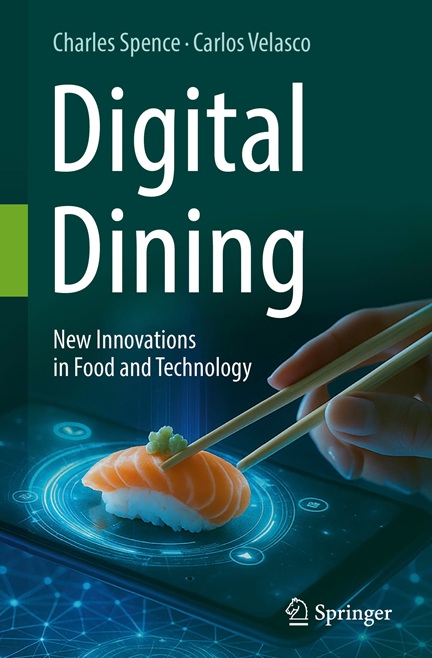
Digital dining: New innovations in food and technology by Charles Spence and Carlos Velasco (2025). Order here.
Abstract: From the earliest stone tools to the latest AI-driven innovations, our relationship with food has always been shaped by technology. In “Digital dining: New innovations in food and technology”, Charles Spence and Carlos Velasco explore how emerging digital tools and technologies, such as smartphones, 3D printing, artificial intelligence, robots, and extended reality, are transforming the way we prepare, consume, and experience food. Diving into the intersections of tradition and innovation, culture and science, this book offers a thought-provoking journey through the world of gastrophysics and multisensory experience design. Will digital technology enrich our culinary experiences or erode the human touch? With insights from leading experts, real-world applications, and a critical lens on the ethical and cultural implications, this book invites readers to explore the tantalising possibilities and challenges of a rapidly changing food landscape. Whether you are a researcher, food enthusiast, a tech innovator, or a curious thinker, this book will provide you with a new lens to see, taste, and experience the future of food.
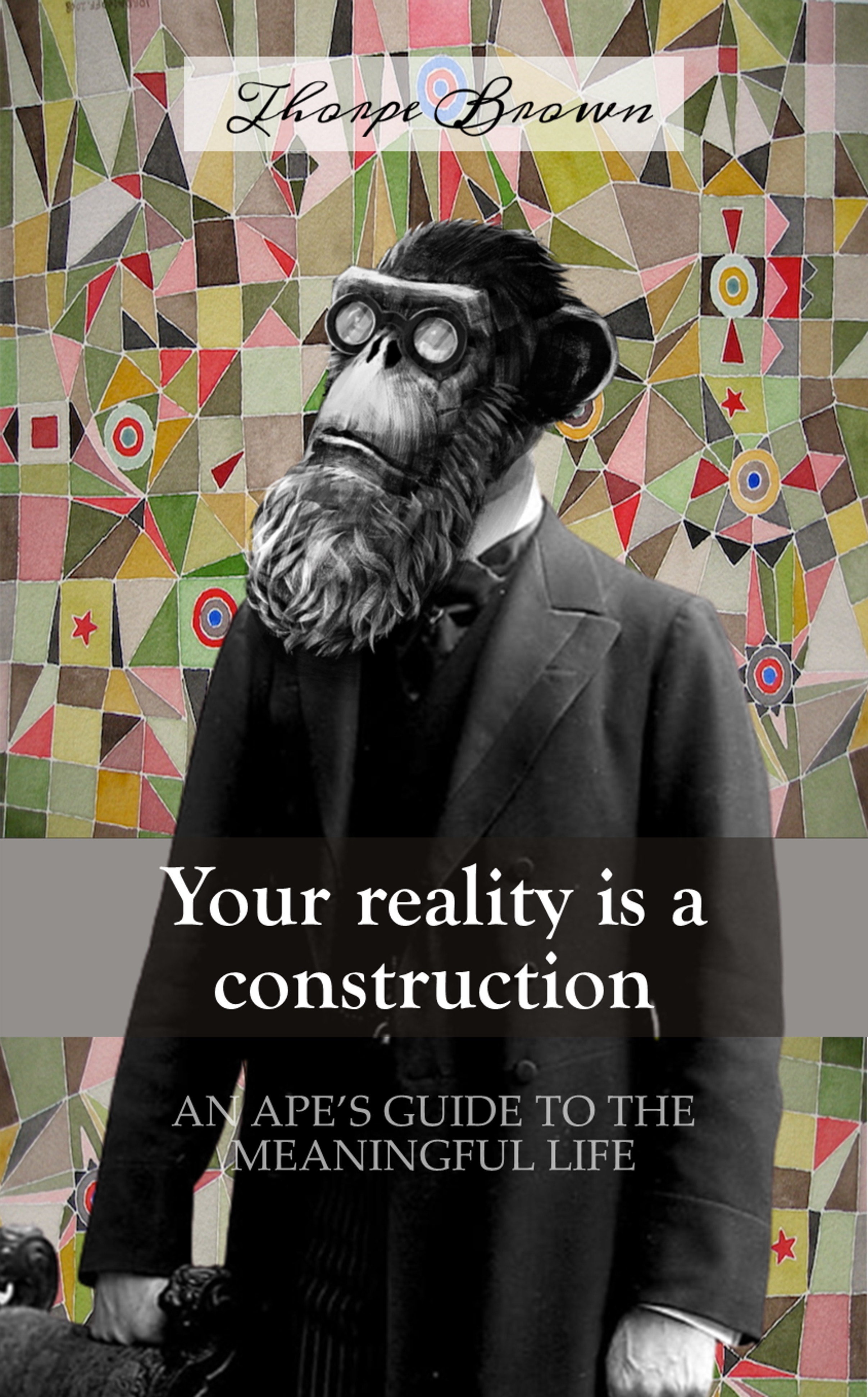
Your reality is a construction by Carlos Velasco (2022). Purchase on Amazon or Jpg.store as an NFT or Amazon.
Abstract: “Your reality is a construction” is my first independently published non-science book and the first original book written as/by an non-fungible token (NFT) fictional character, Thorpe Brown, who is part of the metaverse of The Ape Society (https://www.theapesociety.io/), an NFT community on the Cardano blockchain. The book presents a short reflection for every day of the year, intended to make people question their reality, deconstruct it, and reconstruct it, such that it serves their life purpose(s).
What is the story of Thorpe Brown? Once upon a time, while Thorpe Brown (an non-fungible token character in the metaverse) was performing his craftsman duties, he had a revelation: Nothing has meaning in itself, or does it? His world crumbled and lost all meaning. He woke up from the illusion. What is reality? What is it all about? He wondered… The world around us, our perceptions of it, our likes and wants, or communities and societies, are all constructions, aren’t they? This shocked him. What have I been living for? So, he decided to withdraw from his everyday life to a remote cabin in the world of The Ape Society, somehow like Nietzsche’s Zarathustra and Henry David Thoreau did. After major turmoil and having his mind transformed, he turned to philosophy and now reflects daily on his journey of de- and re-constructing reality, perception, and illusion, meaning and value, and more broadly, life. “Your reality is a construction” compiles a collection of his reflections.
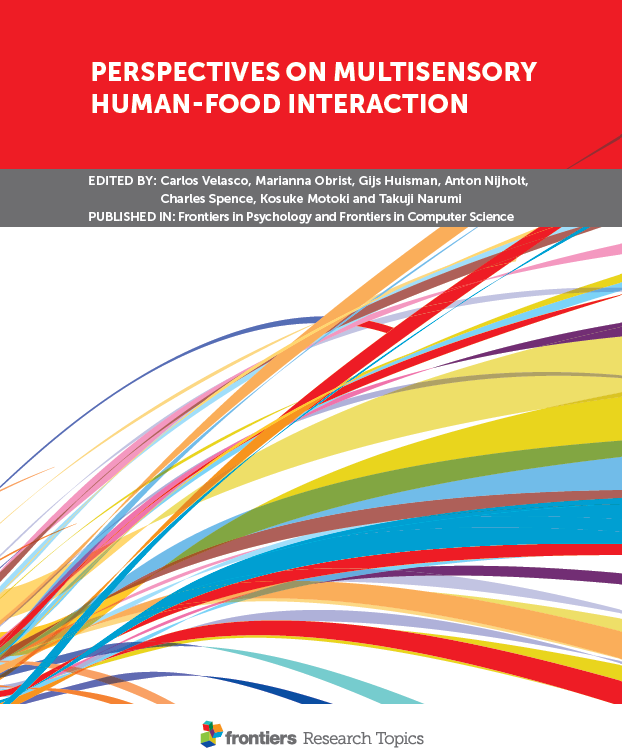
Perspectives on multisensory human-food interaction by Carlos Velasco, Marianna Obrist, Gijs Huisman, Anton Nijholt, Charles Spence, Kosuke Motoki and Takuji Narumi (Eds., 2022). Download here.
Abstract: Eating and drinking are, perhaps, some of the most multisensory events of our everyday life. Take, for instance, flavour, which is one of the most important elements of such experiences. It is known that flavour is the product of the integration of, at least, gustatory and (retronasal) olfactory cues. Nevertheless, researchers have suggested that all our senses can influence the way in which we perceive flavour, not to mention our eating and drinking experiences. Research into multisensory interactions in order to create, modify, and enhance our food-related experiences is one of the core areas of HFI. In this edited collection, we compile investigations and applications of systems that create new, or enhance already existing, eating and drinking experiences (‘hacking’ food experiences) in the context of Human-Food Interaction. Moreover, we were interested in those works that were based on the principles that govern the systematic connections that exist between the senses.

Multisensory experiences: Where the senses meet technology by Carlos Velasco and Marianna Obrist (2020). Order here.
Abstract: Most of our everyday life experiences are multisensory in nature; that is, they consist of what we see, hear, feel, taste, smell, and much more. Almost any experience you can think of, such as eating a meal or going to the cinema, involves a magnificent sensory world. In recent years, many of these experiences have been increasingly transformed and capitalised on through advancements that adapt the world around us – through technology, products, and services – to suit our ever more computerised environment. Multisensory Experiences: Where the senses meet technology looks at this trend and offers a comprehensive introduction to the dynamic world of multisensory experiences and design. It takes the reader from the fundamentals of multisensory experiences, through the relationship between the senses and technology, to finally what the future of those experiences may look like, and our responsibility in it. This book empowers you to shape your own and other people’s experiences by considering the multisensory worlds that we live in through a journey that marries science and practice. It also shows how we can take advantage of the senses and how they shape our experiences through intelligent technological design.
You can watch the virtual launch teaser of Multisensory Experiences below.
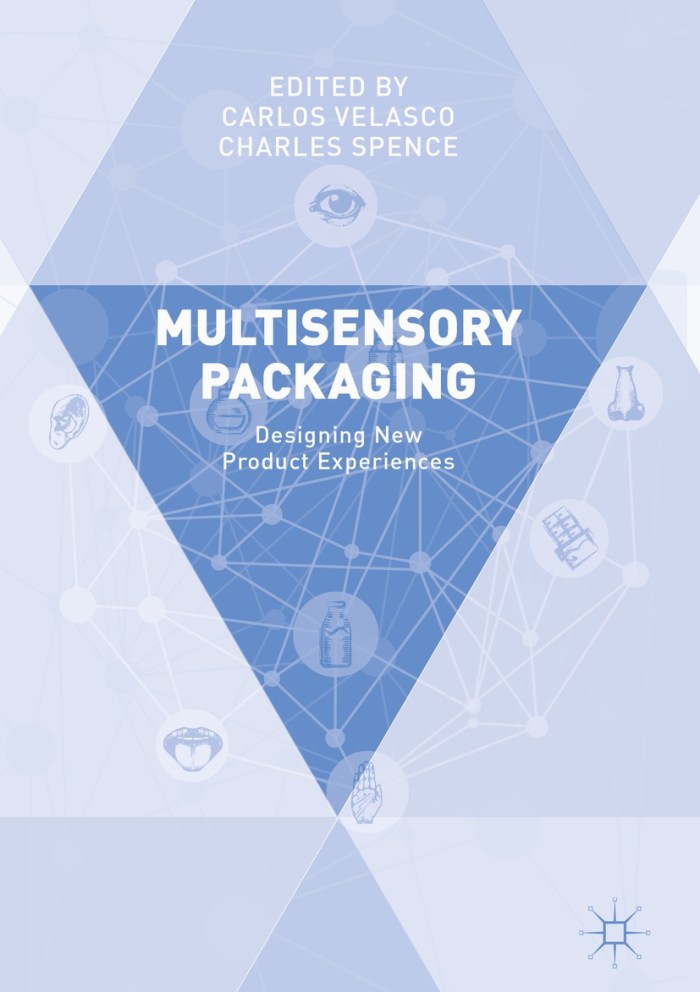
Multisensory packaging: Designing new product experiences by Carlos Velasco and Charles Spence (Eds., 2019). Order here.
Abstract: This edited collection presents state-of-the-art reviews of the latest developments in multisensory packaging design. Bringing together leading researchers and practitioners working in the field, the contributions consider how our growing understanding of the human senses, as well as new technologies, will transform the way in which we design, interact with, and experience food and beverage, home and personal care, and fast-moving consumer products packaging. Spanning all of the senses from colour meaning, imagery and font, touch and sonic packaging, a new framework for multisensory packaging analysis is outlined. Including a number of case studies and examples, this book provides both practical application and theoretical discussion to appeal to students, researchers, and practitioners alike.
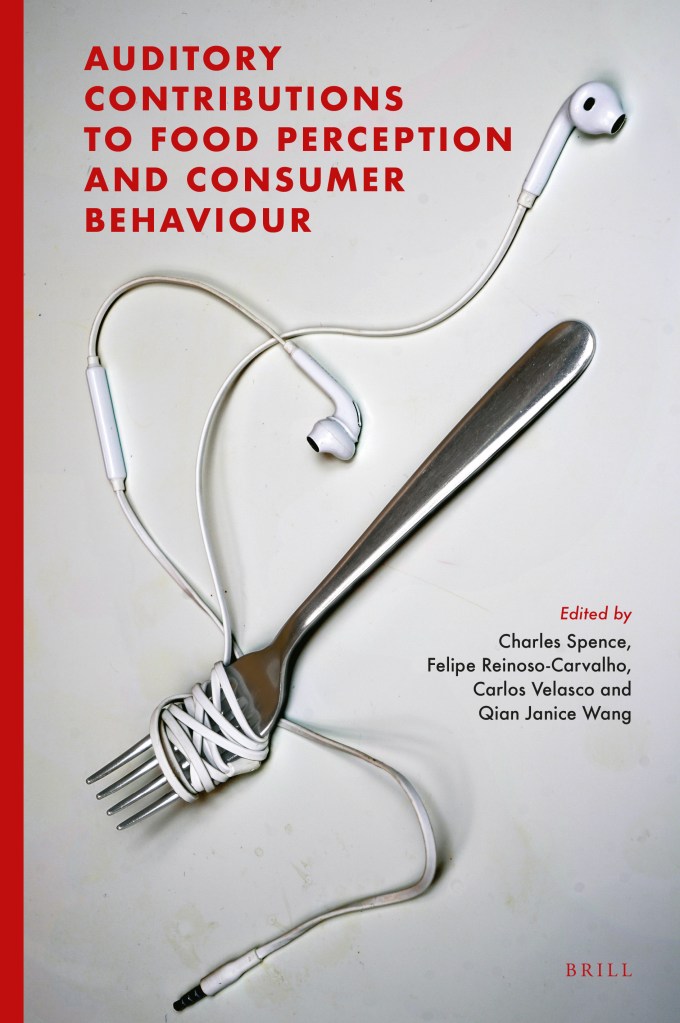
Auditory contributions to food perception and consumer behavior by Charles Spence, Felipe Reinoso Carvalho, Carlos Velasco, and Qian Janice Wang (Eds., 2019). Order here.
Abstract: What we hear before and/or while we eat and drink often affects our tasting experiences. The focus of Auditory Contributions to Food Perception and Consume Behaviour is to provide a state-of-the-art summary on how such music and ambient inputs can influence our expectations, our purchasing behaviour, as well as our product experience. Much of the research collected together in this volume relates to ‘sonic seasoning’: This is where music/soundscapes are especially chosen, or else designed/composed, in order to correspond to, and hence hopefully to modify the associated taste/aroma/mouthfeel/flavour in food and beverages. The various chapters collected together in this volume provide a state-of-the-art summary of this intriguing and emerging field of research, as well as highlighting some of the key directions for future research.
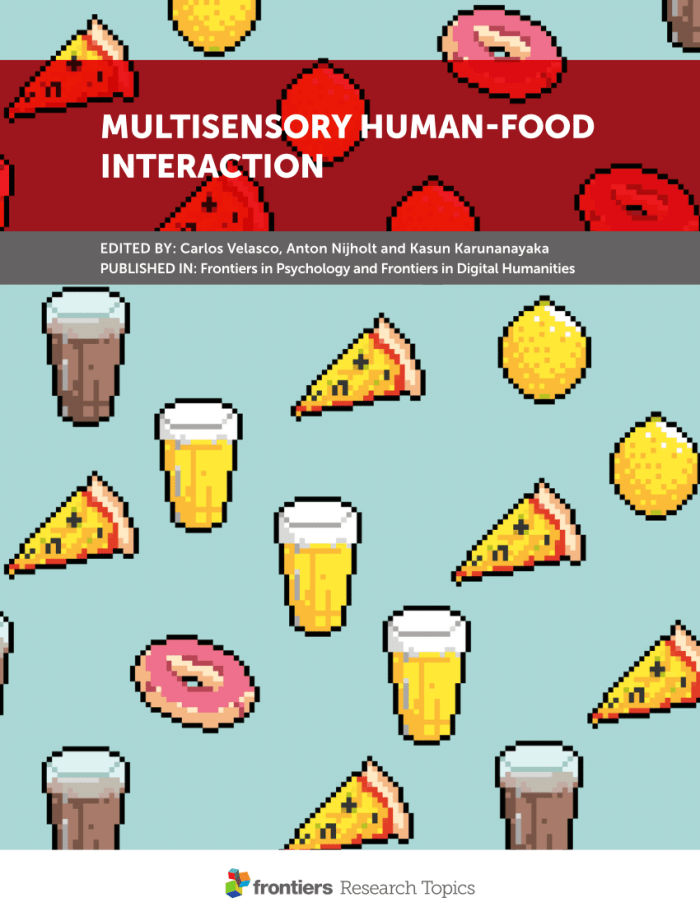
Multisensory human-food interaction by Carlos Velasco, Kasun Karunanayaka, and Anton Nijholt (Eds., 2018). Download here.
Abstract: Our food experiences can be significantly influenced by both intrinsic and extrinsic multisensory information. Therefore, it is crucial to understand and apply the principles that govern the systematic connections that exist between the senses in the context of Human-Food Interaction (HFI). In our Research Topic, namely Multisensory Human-Food Interaction (MHFI), several studies that consider such connections in the context of HFI are presented. We also have contributions that focus on multisensory technologies that can be used to share and reproduce specific HFIs. This eBook, which resulted from the Research Topic, presents some of the most recent developments in the field of MHFI. The eBook begins with the Editorial, which provides an overview of MHFI. Then, it includes six articles that relate to principles in MHFI (Section 1) and three on technologies in MHFI (Section 2). We hope that the different contributions featured here will support future developments in MHFI research.
 Carlos Velasco